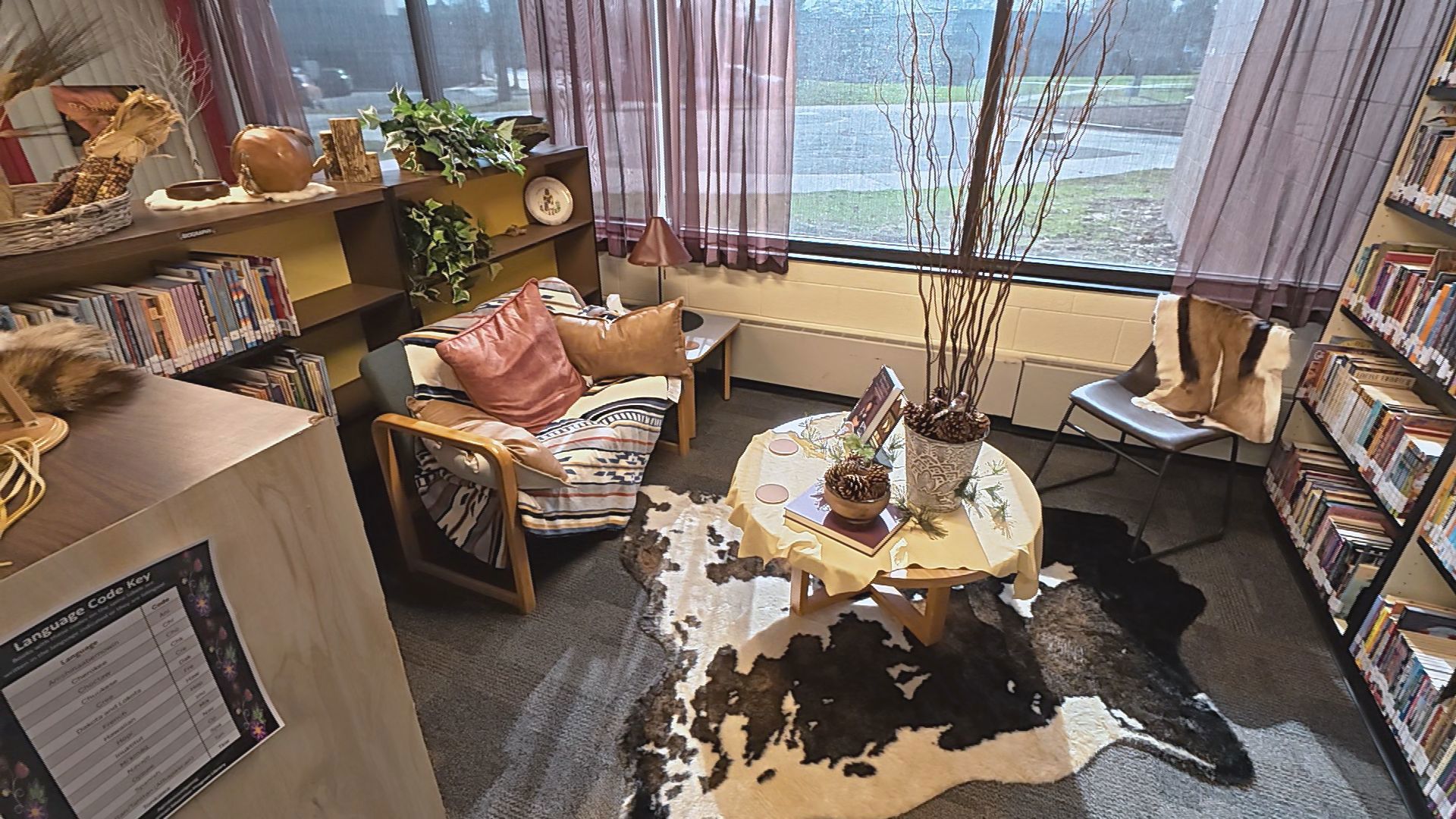
 Grand Rapids Public Schools (GRPS) has over 200 Native American students in the district, some of whom helped fill the new library shelves with books.
The district is proud to unveil its brand new Native American Education Program (NAEP) Library.
Title VI Native American Education Coordinator for GRPS, Amy Westcott, said the library has over 4,000 books in 16 different languages — from Anishinaabemowin, to Potawatomi, Choctaw and Cree, just to name some.
“We actually had a student the other day come in who was Apache, and actually found a book that he could open up and read. So that was our goal with this program, is to make sure that we have every student identified in here when it comes to our Native American tribes in the United States,” said Westcott.
The NAEP Library features books for young readers, reference books, nonfiction books, books about sacred medicines and more.
“We have over 200 students in our district that we service that are Native American,” said Westcott. “We have multiple tribes. Every single student that we service, we have their tribes in our library. So I think one unique thing about our library is that our kids helped us put some of these books in here. They wanted to come in here and see themselves in some of these books.”
Parent committee chairperson for the Title VI Native American Education Program for GRPS, William Odykirk, says a large portion of the library focuses on tribes in West Michigan.
“There’s a large portion of it that does relate to federally recognized tribes of this area,” said Odykirk. “But one of the big values of native peoples is a welcoming and respect of other peoples, and here that’s demonstrated by bringing in and housing books that have knowledge from other tribes. So the program is really looking forward to being a welcoming and safe place for people to find out more about themselves.”
It’s a goal of the NAEP Library that students feel that it is their place to educate themselves.
“I’m hoping that they feel that this is their place, that they feel safe and welcomed here, and that they welcome others here,” said Odykirk. “That they begin to see themselves and their cultural identity as just a normal part of the landscape, that it has special aspects of being in the landscape, and that it’s just part of recognizing where we are now and helping to put a foundation down to develop more education and to move further into the future.”
By Steven Bohner | wzzm